
Accreditation
The Department of Electrical Engineering started since the inception of NIT Meghalaya. Presently the department offers B.Tech, M.Tech and PhD Programs. The B. Tech program started in 2010 with an intake of 30 students at NIT Surat and since 2014 onward M.Tech program has been started with an intake of 20 students offering specialization in Power & Energy Systems. Presently there are full time and part time research scholars, registered for the PhD program in diverse specializations. The Department aims to impart high quality education to the students and carry out fundamental and industry oriented research work. The research interest of faculties encompass various areas of electrical engineering such as Power system Control, Smart Grid Technology, Synchrophasor Technology, Power Quality and Renewable energy integration to grid, Power Electronics & Drives, Control System and Instrumentation, Signal Processing and Biomedical Instrumentation, High Voltage Engineering etc. The department have well-equipped laboratory facilities to the students such as Basic Electrical Engineering Lab, Electrical Machine Lab, Network and Systems Lab, Digital Electronics Lab, Power System Lab, Computational Lab, Control & Instrumentation Lab, Power Electronics Lab, Electric Drives Lab, Microprocessor Lab, Microcontroller & Embedded Systems Lab. Specialized simulation softwares like Matlab, Sincal, FLUX, PSPICE, PSIM, PSS@E, EMYP etc. are available with the department to carry out experiments and research activities. Besides, faculty of the EE department are very actively publishing papers in reputed journals and conferences such as IEEE, IET, Elsevier, Springer, Taylor and Francis, Wiley etc. Moreover, faculty members of EE department have received several sponsored research projects from various agencies like SERB-DST, CPRI, REC and State Council of Science Technology & Environment (SCSTE, Govt. of Meghalaya).
The department has two research laborartory.
Research Laboratory I
Established and funded by REC Transmission Projects Company Limited (Period: 2017-19) for the project titled as “Synchrophasor Sensing and Seamless Control of Smart Distribution Network with Renewable Energy Integration”. Experimental setup under this project is Solar PV and 10KW Inverter, DG setup and Battery bank, three-phase MLI. Under this project, four JRFs are working, and they have published their research works in the reputed/indexed journals such as IEEE Transaction on Industrial Informatics and Industrial Application Society etc. and IEEE Conference paper.
Research Laboratory II
Funded by DST and has experimental setups related to renewable energy integration. It includes a grid-connected wind turbine emulator using a DC motor coupled with a permanent magnet synchronous generator, a photovoltaic (PV) array, a bidirectional buck-boost converter, a DC-DC boost converter, and a Vienna rectifier. Each component plays a crucial role in exploring the integration of renewable energy sources into existing power systems. Also, a Pumped Hydro Energy Storage (PHES) system emulator is used through a meticulously designed setup. This setup includes a brushless DC (BLDC) motor coupled with a direct current (DC) machine controlled by a two-level inverter and chopper. Adding to the system's versatility and precision, an FPGA board takes charge of managing system control, ensuring optimal performance.
Vision of the Department
A Centre of Excellence in Electrical & Electronics Engineering and to produce high quality, self-motivated, creative and ethical engineers and technologists, contributing effectively to universal science and contemporary education.
Mission of the Department
M1: To impart quality engineering education and ethics to its students
M2: To adopt the best pedagogical methods in order to maximize knowledge transfer
M3: To have adequate mechanisms to enhance implementation of theoretical concepts in practical set-ups
M4: To carry out high quality research leading to the creation of Intellectual Property
M5: To provide the best facilities and environment to its stakeholders by creating the desired ambience
Programme Specific Outcomes (PSOs)
PSO1: Modelling and Analysis - An ability to mathematically model and analyse the performance of Electrical Machines, Control systems, Instrumentation systems, Power systems and Power Electronic systems
PSO2: Design and Development - An ability to design the hardware and software requirements for the development of Electric drives Automation and Embedded systems
PSO3: Ability to apply mathematical methodologies to solve computation task, model real world problem using appropriate data structure and suitable algorithm
Program Educational Objectives (PEOs)
PEO1- Core Competence: Ensure practicing Electrical engineers to contribute for academia as well as industry or academia in contemporary issues using appropriate engineering tools in professional, social, economical and ethical manner including safety and environmental concerns.
PEO2- Breadth Competence: Exemplify teamwork and leadership qualities in allied professions with effective communication skill in the multidisciplinary complex engineering solution that aid the overall development of the nation and the world.
PEO3- Professional Ability: Motivate innovation and creativity through application of knowledge, skill and engineering solutions keeping in the view sustainable development of the society.
PEO4- Learning Attitude: Involve in dissemination of knowledge, skills and attitude with effective research through higher education and life-long learning.
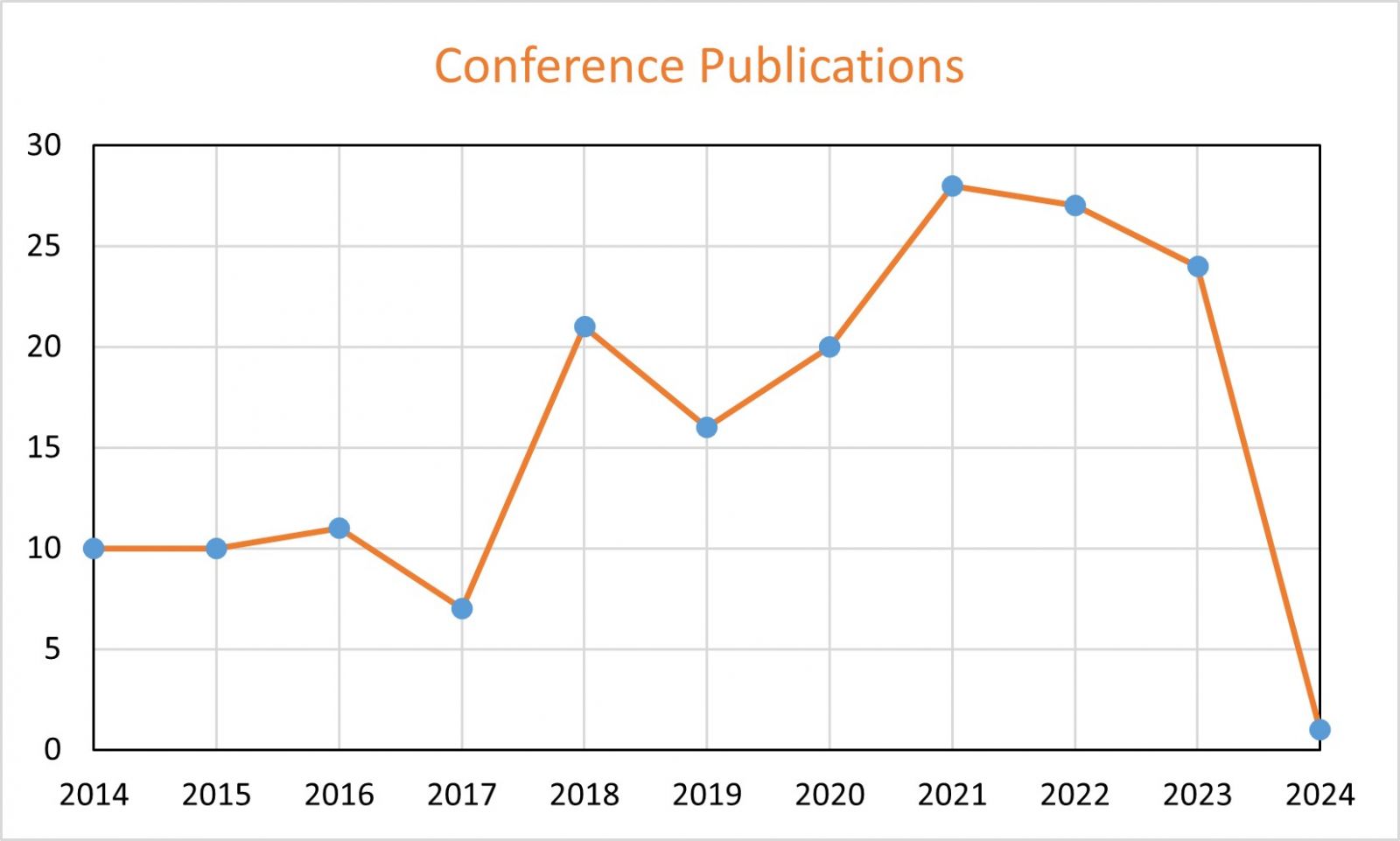

Our Electrical Engineering faculty comprises a team of highly qualified, experienced, and dedicated educators who bring a strong blend of academic expertise, research involvement, and industry exposure. They are committed to delivering high-quality education and creating an engaging, supportive learning environment for all students.

Professor

Assistant Professor

Assistant Professor

Assistant Professor
Assistant Professor

Assistant Professor

Assistant Professor
Associate Professor

Associate Professor
Assistant Professor
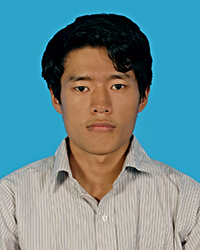
Assistant Professor
National Institute of Technology Meghalaya Saitsohpen Sohra, East Khasi Hills, Meghalaya, India- 793108
hod.ee@nitm.ac.in