|
Geotechnical Engineering This laboratory is equipped with modern apparatus and testing equipment to conduct experiments and research in accordance with relevant IS codes and academic curriculum requirements. The facility supports undergraduate, postgraduate, and research activities |
|
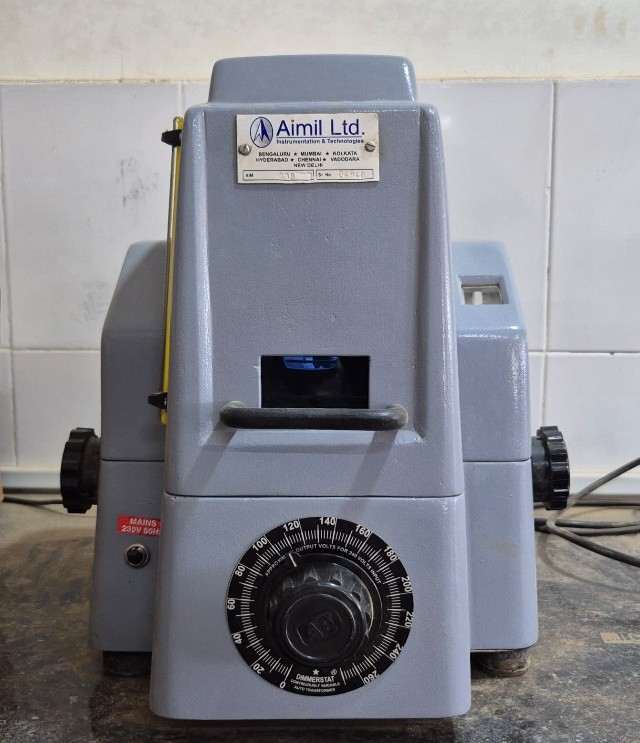 |
Infra-Red Moisture Meter An Infrared Moisture Meter is a laboratory instrument used to determine the moisture content of materials by using infrared radiation for rapid drying. The instrument heats the sample through an infrared lamp, causing moisture to evaporate. The loss in weight during heating is continuously measured by a built-in electronic balance, and the moisture content is calculated automatically. |
 |
Soil cone Penetrometer A soil cone penetrometer is a device used to measure the penetration resistance of soil, which correlates to soil strength, stiffness, compaction quality, and bearing capacity. |
|
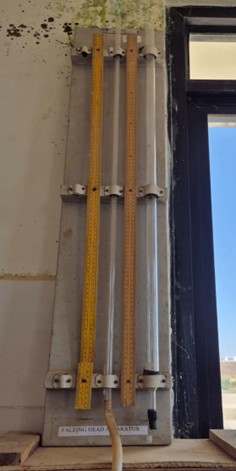
Falling Head Apparatus
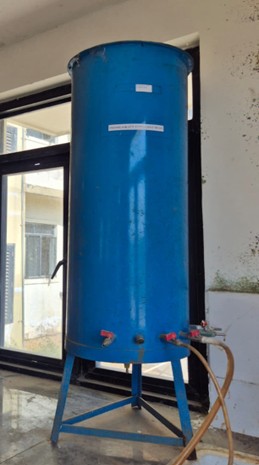
Constant Head Apparatus |
Permeability Apparatus The Falling Head and Constant Head apparatus are laboratory devices used to determine the coefficient of permeability (hydraulic conductivity, k) of soils. |
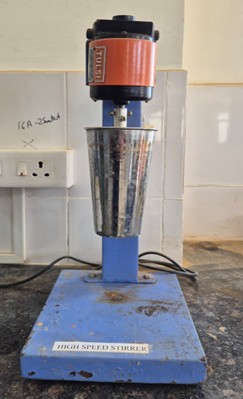 |
High Speed Stirrer A High-Speed Stirrer (also called a laboratory mechanical stirrer or overhead stirrer) is used in geotechnical and construction materials laboratories for uniform mixing of soil suspensions, cement slurries, grout, and chemical solutions. |
 |
Cassagrande Apparatus The Casagrande Apparatus is a laboratory device used to determine the Liquid Limit (LL) of fine-grained soils. The liquid limit is the moisture content at which soil changes from a plastic state to a liquid state, as defined in soil consistency classification. |
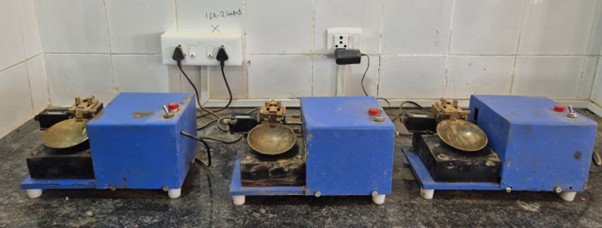 |
IS Sieves with Vibratory Sieve Shaker IS Sieves with Vibratory Sieve Shaker are used to determine the particle size distribution of soil, aggregates, and other granular materials. The test is performed using a set of standard Indian Standard (IS) sieves arranged in descending order of opening size and mechanically shaken using a vibratory sieve shaker to ensure uniform separation of particles |
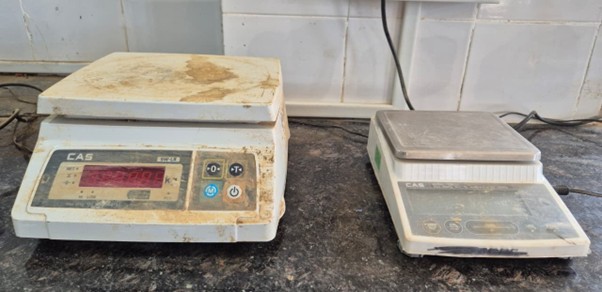 |
Weighing Balance |
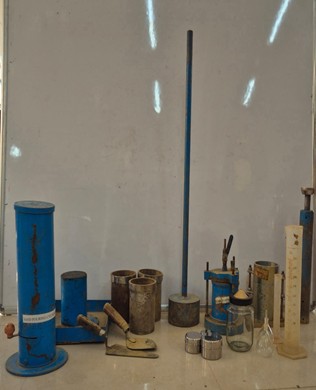 |
Soil testing Apparatus The laboratory setup includes equipment for determining compaction characteristics, specific gravity, permeability, and moisture content of soil, which are essential parameters in geotechnical engineering. |
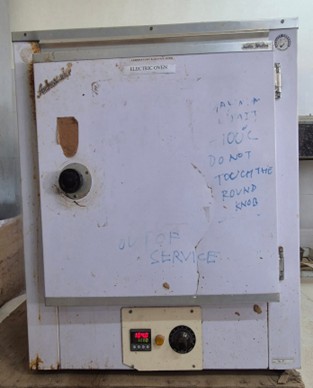 |
Electric Hot Air Oven The Electric Hot Air Oven is a laboratory heating device used for oven-drying of soil and material samples at controlled temperatures. It operates on the principle of uniform hot air circulation, maintaining a constant temperature throughout the chamber for accurate drying. |
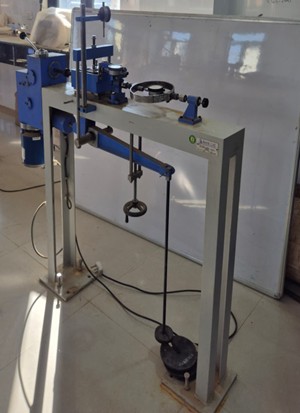 |
Direct shear Apparatus The Direct Shear Apparatus is used to determine the shear strength parameters (cohesion “c” and angle of internal friction “φ”) of soil under controlled laboratory conditions. The test helps evaluate the resistance of soil against shear failure along a predetermined horizontal plane. |
 |
Unconfined Compression Strength Apparatus The Unconfined Compressive Strength (UCS) Apparatus is used to determine the compressive strength of cohesive soils without lateral confinement. It is one of the simplest and most widely used shear strength tests for saturated clay soils. |
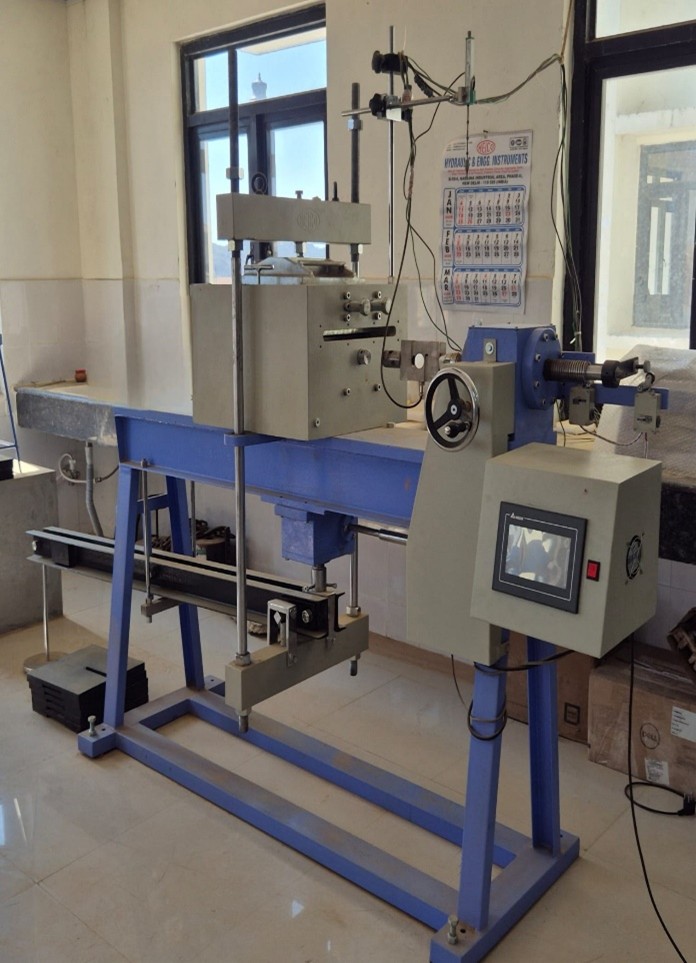 |
Large Scale Direct Shear Apparatus The Large Scale Direct Shear Apparatus is used to determine the shear strength characteristics of coarse-grained soils and aggregates under controlled laboratory conditions. It is particularly suitable for testing soils containing large particles that cannot be accommodated in a conventional direct shear box. |
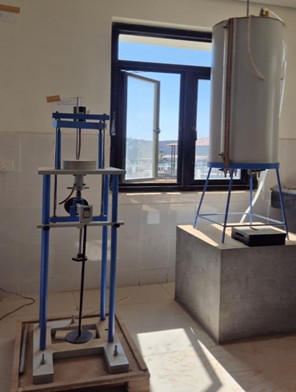 |
Cross Permeability Apparatus The Cross Permeability Apparatus is used to determine the coefficient of permeability in the horizontal direction of soil specimens. It is particularly useful for studying anisotropic permeability characteristics where the horizontal permeability differs from the vertical permeability. |
 |
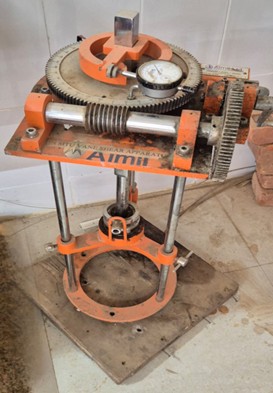
Laboratory Vane Shear Apparatus The Laboratory Vane Shear Test Apparatus is used to determine the undrained shear strength of soft and sensitive clay soils under controlled laboratory conditions. It is especially suitable for very soft clays where conventional shear tests may disturb the sample |
 |
In-situ Vane Shear Apparatus The In-Situ Vane Shear Apparatus is used to determine the undrained shear strength of soft clay directly in the field without disturbing the soil structure. It is particularly suitable for very soft to medium stiff saturated clays. |
 |
Sample Extractor The Sample Extractor is used for removal of cylindrical soil specimens prepared for the Unconfined Compressive Strength (UCS) test without disturbing their natural structure or shape |
 |
Odometer apparatus The Oedometer Apparatus (also known as Consolidation Apparatus) is used to determine the compressibility and consolidation characteristics of cohesive soils under one-dimensional loading conditions. |
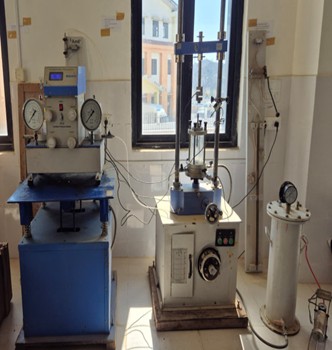 |
Triaxial Apparatus The Triaxial Apparatus is used to determine the shear strength parameters and stress–strain behaviour of soil under controlled drainage and confinement conditions. It is one of the most reliable laboratory tests in geotechnical engineering for evaluating soil behaviour under simulated field stress conditions. |